

Since 2020, Inter Milan have captured three league titles across six seasons, and that tally does not even include the controversial campaign many fans still believe slipped away because of questionable officiating. Those championships came under three different managers: Antonio Conte, Simone Inzaghi, and Cristian Chivu. Each coach brought a unique personality and tactical philosophy, yet one thing never changed. From start to finish, every one of them relied on a three-center-back system. Over the years, many supporters following BD Cricket updates also noticed how modern football increasingly rewards managers brave enough to stick with a clear identity.
Looking back, Inter’s relationship with the three-man defense actually stretches back fifteen painful years. It is hard to believe that 2011 now feels like another era entirely. That summer, when Gian Piero Gasperini arrived in Milan, expectations were sky-high. His work at Genoa CFC had impressed nearly everyone in Italian football with its fluid movement and aggressive tactical structure.
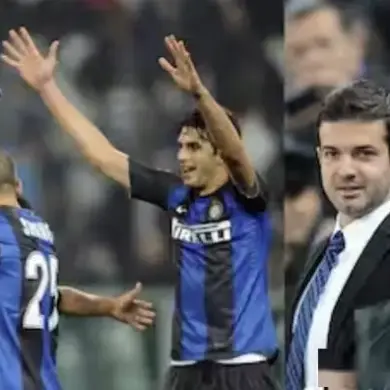 Unfortunately, his first major test ended in disaster. In the Italian Super Cup against AC Milan, Inter lined up with a three-man defense featuring Walter Samuel centrally, Andrea Ranocchia on the right, and current Inter coach Cristian Chivu on the left. The Nerazzurri lost 2-1 to their city rivals and watched Milan lift the trophy. Fans initially brushed it aside, believing it was only one match, but the storm clouds quickly gathered.
Inter then suffered a shocking home defeat to US Lecce, followed by a 4-3 loss away to Palermo FC. In the UEFA Champions League, they were beaten at home by Trabzonspor, before finally earning their first point in a dull draw against AS Roma. Four matches, three defeats, one draw, and only a single point. Gasperini stubbornly declared that he would rather die with his ideas than betray them. It was a classic case of standing his ground no matter the cost.
The final blow arrived away against Novara FC. Lucio replaced Samuel on the right side of defense, Ranocchia shifted centrally, while Chivu remained on the left. Yet Ranocchia was sent off, and Inter collapsed to a humiliating 3-1 defeat. Gasperini was dismissed almost immediately afterward. Thus, the first league report card for Inter’s three-center-back experiment ended with three losses, one draw, and a single point. The beginning could hardly have been uglier.
After a short rescue spell under Claudio Ranieri, the young Andrea Stramaccioni took over. During his year and three months in charge, inconsistent performances constantly haunted the team, forcing him to revisit the three-man defense in search of greater stability. For a brief moment, it seemed to work. Inter stunned Juventus FC away from home with a daring 3-4-3 formation. Ranocchia, Samuel, and Juan Jesus formed the defensive trio, while Antonio Cassano, Rodrigo Palacio, and Diego Milito led the attack. For a few weeks, hope returned to San Siro and supporters felt there might finally be light at the end of the tunnel.
Sadly, injuries to Samuel and Chivu soon shattered the momentum. The system fell apart almost overnight. Later came Walter Mazzarri, a coach deeply associated with three-man defenses. Yet his timing could not have been worse. Inter were trapped in one of the darkest periods in club history and lacked the resources to properly support a rebuilding project. Veteran fans still remember the sight of Mazzarri anxiously chewing on a water bottle near the touchline, a picture that perfectly captured the pressure surrounding the club. Around the same period, many football followers scrolling through BD Cricket coverage often compared Inter’s struggles to other fallen European giants desperately searching for stability.
To Mazzarri’s credit, his start was encouraging. Several players openly backed him in the dressing room. Hugo Campagnaro trusted him deeply after their successful time together at UC Sampdoria. Using defensive combinations such as Campagnaro, Ranocchia, and Juan Jesus, later rotating with Rolando and Samuel, Mazzarri somehow guided Inter back into European competition. It felt like a long-awaited revival, but in reality it proved to be the calm before the storm.
At the end of that season, the club’s golden Argentine generation gradually departed. Samuel, legendary captain Javier Zanetti, midfield anchor Esteban Cambiasso, and treble hero Milito all said goodbye. Seeking experience, Inter signed Nemanja Vidic from Manchester United FC on a high salary. Few expected what followed. Vidic struggled badly from the start and looked completely uncomfortable inside a three-center-back system.
In his Serie A debut, the Serbian defender received a red card. On September 29, 2014, Inter suffered a humiliating 4-1 defeat at home to Cagliari Calcio, with a back three of Marco Andreolli, Vidic, and Juan Jesus repeatedly exposed by the 1.69-meter striker Victor Ibarbo. Shortly afterward, the club officially began planning another managerial change.
A month and a half later, Mazzarri was dismissed. What remained was a broken three-man defensive structure, the unforgettable image of a coach biting his water bottle in frustration, and lingering controversy surrounding his refusal to bring Zanetti off the bench in his final Milan derby. Still, the real focus here is not Mazzarri himself, but the system. Looking back now, Vidic’s inability to adapt may have stemmed from several reasons: discomfort within the tactical demands of Italian football, difficulty adjusting after leaving Manchester United, and declining physical sharpness. Yet one detail was often forgotten. Before joining Inter, Vidic underwent hernia surgery during the summer. That operation ultimately destroyed the defensive cornerstone Inter had hoped to build around.
Strangely enough, a similar story emerged again in 2025. Before the new campaign, Davide Frattesi also underwent hernia surgery, and his performances sharply declined afterward. Football can sometimes be a cruel game of fine margins, and even supporters following Bangla Cricket reports understand how quickly fortunes can change once injuries begin to pile up. Whether it is coincidence or something more, nobody truly knows.