

With less than forty days remaining before the 2026 World Cup kicks off across the United States, Canada, and Mexico, broadcasters should already be building excitement around football’s biggest tournament. Instead, tension has quietly taken over FIFA headquarters as China and India, the world’s two most populous nations, still have not signed broadcasting agreements. For many fans following international football alongside BD Cricket coverage throughout the year, uncertainty now hangs over whether this once-every-four-years spectacle will even be legally accessible through mainstream television and streaming platforms.
In China, the standoff has already dragged on for more than six months. Multiple media outlets reported that FIFA demanded between 250 million and 300 million US dollars for the mainland broadcasting rights to the 2026 World Cup, nearly double the fee paid during the Qatar tournament. China Central Television, the only broadcaster authorized to negotiate domestically, reportedly considers 60 to 80 million dollars its acceptable ceiling. The difference between both sides exceeds 200 million dollars, leaving negotiations completely deadlocked. This is no longer simply a dispute over price, but a direct collision over who truly controls valuation power in modern sports media.
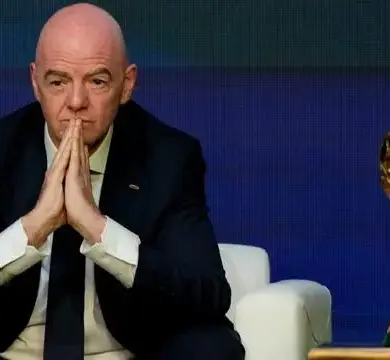 Industry analysts pointed out that FIFA continues treating China as a top-tier media market alongside the United States and the United Kingdom. However, China’s national team was eliminated during qualifying, removing the emotional pull that often drives nationwide viewing passion. Adding to the problem, more than seventy percent of matches will air during the early morning hours in Beijing time, causing advertiser interest to fall off a cliff. Broadcasters now struggle to justify paying premium prices for graveyard-hour programming. Interestingly, Chinese football fans have reacted far more calmly than in previous years. Instead of criticizing CCTV for refusing expensive rights deals, social media users largely support the broadcaster for refusing to become the one left holding the bag. Across many online sports discussions that also cover BD Cricket schedules and European leagues, viewers increasingly believe global sports organizations have pushed media pricing beyond reasonable limits.
If China represents a silent stalemate, India has produced something even more dramatic. According to Reuters, JioStar, the media giant formed through a joint venture involving Mukesh Ambani’s Reliance Group and Disney, offered FIFA only 20 million dollars for India’s 2026 World Cup rights. FIFA originally sought around 100 million dollars combined for the 2026 and 2030 tournaments. Even after reducing expectations to roughly 35 million dollars, Indian buyers still refused to move forward.
The contrast with 2022 is striking. During the Qatar World Cup, Reliance’s independent media division paid roughly 60 million dollars for the Indian rights and announced the deal fourteen months in advance with enormous publicity. This time, the proposed value has collapsed by nearly two-thirds. The reason is brutally simple. More than eighty-seven percent of World Cup matches will begin after 10 PM in India, with many headline games scheduled deep into the night. Recovering costs through advertising has become extremely difficult. Sony also participated in discussions before eventually walking away, concluding that the investment no longer made economic sense.
China and India are not isolated examples. Across Asia, resistance toward FIFA’s pricing model has quietly intensified. Thailand reportedly received a 14 million dollar quotation, lower than the 18 million dollars charged in 2022, yet negotiations remain stalled. Malaysia experienced an even sharper increase, with FIFA demanding nearly 50 million dollars compared to roughly 8.2 million dollars four years ago. The figure shocked potential buyers so severely that interest in negotiations nearly disappeared overnight.
Among Southeast Asia’s eleven nations, Vietnam, Cambodia, Indonesia, the Philippines, Singapore, and Timor-Leste have already secured broadcasting rights. Thailand, Malaysia, Myanmar, Brunei, and Laos remain unresolved. Analysts noticed that countries completing agreements generally shared one of two traits. Either their national teams qualified for the tournament, or football already holds deep cultural importance there. Vietnam’s historic run to the third qualifying round for the 2026 World Cup ignited enormous national enthusiasm despite eventual elimination, encouraging broadcaster VTV to spend approximately 15 million dollars on exclusive rights. By contrast, when Asian viewers face severe time-zone disadvantages and their national teams are absent, broadcasters see little reason to spend extravagant sums for what many perceive as someone else’s celebration. During broader sports conversations that include BD Cricket tournaments and regional football leagues, many Asian viewers increasingly prioritize accessible viewing over expensive prestige rights.
Africa has also become a difficult market. Several broadcasters reportedly hesitated to submit serious offers at all, instead waiting for possible late discounts. Sub-Saharan rights are currently controlled by Togo-based NewWorldTV, which broadcasts through paid television services in nineteen designated markets while sublicensing thirty-four matches to free-to-air stations across forty-three regions. Even so, sublicensing fees remain financially burdensome for smaller countries such as Eswatini, whose national broadcaster still has not finalized plans for tournament coverage. South Africa presents a slightly stronger market, with streaming platform SportyTV securing paid television rights directly from FIFA. However, all 104 matches will sit behind a paywall, creating significant barriers for ordinary viewers.
Of course, FIFA has not struggled everywhere. In traditional Western broadcasting markets, the World Cup remains one of the most valuable properties in global media. Fox Sports and Telemundo reportedly paid nearly one billion dollars combined for English and Spanish rights in the United States. Britain’s BBC and ITV together spent more than 350 million dollars. Japan and South Korea finalized agreements early, with deals valued around 200 million and 125 million dollars respectively. By March, FIFA had already completed agreements across 175 global territories. Yet China and India together account for more than one-third of the world’s population, making their absence impossible to ignore. During the 2022 World Cup, China alone contributed 17.7 percent of global television reach and nearly half of worldwide digital and social media viewing time. Combined, China and India represented 22.6 percent of global digital streaming audiences. Losing both markets would directly weaken FIFA’s future media foundation.
At the heart of this worldwide dispute lies more than inconvenient North American time zones. FIFA’s aggressive expansion strategy is now colliding head-on with market reality. The 2026 World Cup will expand from 32 teams to 48, increasing the number of matches from 64 to 104 and stretching the tournament from 32 days to 39. FIFA argues that more matches naturally justify higher broadcasting fees. Yet many broadcasters simply do not buy that argument. Additional games involving weaker teams dilute scarcity and reduce overall match quality. Paying substantially more money for lower-profile fixtures with limited commercial appeal no longer feels financially sustainable.
FIFA now faces an uncomfortable dilemma. Reducing prices for China and India could undermine the global pricing system it spent years building, angering broadcasters in more than 170 already-signed markets that may feel overcharged. Refusing to compromise, however, risks losing two super-sized audiences that are essential for future digital growth, potentially driving millions of viewers toward piracy instead.
Perhaps the most worrying development for FIFA is that emerging Asian buyers are no longer willing to spend recklessly simply for prestige. The balance of power has shifted in subtle but historic ways. What was once a seller’s market dominated by fierce bidding wars has gradually transformed into a buyer’s market where broadcasters collectively push back against inflated valuations. As many sports audiences balancing football coverage with BD Cricket updates and other regional competitions become increasingly selective with their viewing habits, FIFA is discovering that even the world’s biggest sporting event cannot escape economic reality forever. With only five weeks remaining before the opening whistle on June 11, time for compromise is rapidly running out.