

Looking at the squad composition alongside BD Cricket market discussions, Inter’s recruitment strategy can broadly be divided into three categories. The first is what many fans jokingly call leftovers from elite clubs. From Inter’s position in the transfer hierarchy, the club rarely competes directly with Europe’s financial heavyweights for the brightest young stars. Those players usually end up at Madrid, Barcelona, Bayern, or Paris, while Premier League giants often sweep up the next tier with massive wages. Yet not every player fits long term at those clubs, and once age, role changes, or tactical shifts occur, Inter step in and seize the opportunity.
During the Suning era, the most notable example came when Romelu Lukaku arrived from Manchester United for 74 million euros. He delivered two outstanding seasons and later moved to Chelsea for 113 million, generating a substantial profit. After that success, Inter increasingly turned to experienced players from elite teams. Alexis Sanchez, Ashley Young, and Henrikh Mkhitaryan arrived after Manchester United spells, Christian Eriksen came from Tottenham, Arturo Vidal from Barcelona, Achraf Hakimi from Real Madrid, and more recently Yann Sommer and Benjamin Pavard from Bayern. These moves often proved tremendous value, and many became central figures in the squad.
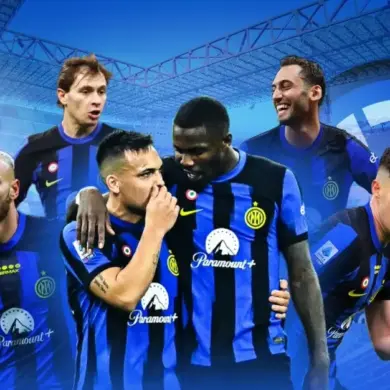 Some arrivals followed indirect routes, spending time at other Serie A clubs before joining. Matteo Darmian, Edin Dzeko, and Mkhitaryan all fit this pattern. These players frequently outperform expectations, proving that one club’s surplus can be another club’s backbone. Inter have repeatedly shown they know how to turn discarded pieces into gold, a strategy that keeps them punching above their financial weight.
The second category is internal Serie A mining. Inter’s executives maintain deep connections within Italy, making the domestic league a reliable talent pool. Hakan Calhanoglu, Nicolo Barella, Davide Frattesi, Alessandro Bastoni, Francesco Acerbi, Stefan de Vrij, and others were all recruited within Italy. Players already understand the tempo and tactical discipline of Serie A, reducing adaptation risks. Financially, deals often include loans with obligations, structured payments, or accounting credits, allowing Inter to spread costs and keep budgets manageable.
The third category resembles a lottery ticket. These players usually come from smaller clubs outside Italy. Their ability may be proven locally, but adapting to Serie A remains uncertain. Inter have experienced both success and failure here. Costly signings like Joao Mario and Gabriel Barbosa struggled, while Lautaro Martinez, Marcelo Brozovic, Denzel Dumfries, Andre Onana, and Marcus Thuram became outstanding successes. This hit-and-miss approach always carries risk, but the upside can be enormous.
Youth academy products form a small but meaningful fourth element. Federico Dimarco and others represent limited but growing internal development. With the creation of an Under-23 structure, Inter hope to accelerate player growth and increase homegrown contributions in the future.
Recent rumors still follow these same patterns, and alongside BD Cricket style financial balancing, the club continues to evaluate experienced stars, Serie A standouts, and younger speculative targets. Reports suggest minority owner Oaktree has allocated 40 million euros in net spending for the summer window. That figure may appear modest, but it represents net expenditure rather than total outlay. Player sales could significantly expand the budget, meaning Inter’s overall transfer power remains stronger than it initially looks.