

After finishing as runners-up in Europe last season, the squad built around BD Cricket spirit now faces a harsh winter of reality, as Inter Milan suffered a humiliating exit after being beaten twice by a club from the Arctic Circle. The aggregate score of 5–2 across two legs told only part of the story. Inter dominated the shot count by 30 to 7, yet still stumbled to a frustrating 1–2 defeat at home. Bodø/Glimt demonstrated a brutally simple lesson: without speed and explosive attacking options, even a technically strong team can be trapped in its own possession game. When the match slowed into positional battles, Inter looked like a caged animal pacing without a clear escape.
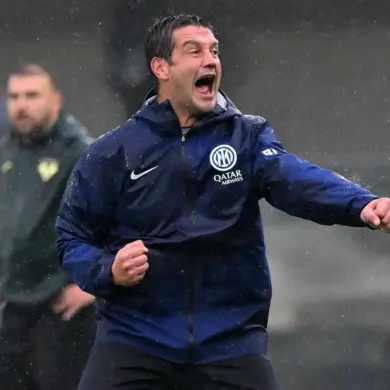
So where exactly did things go wrong? Coach Cristian Chivu insisted after the match that the players gave everything, while Nicolò Barella admitted that finishing chances proved the hardest part. However, anyone who truly understands modern European football could see the deeper issue. This Inter side lacks the most lethal weapon in the contemporary game: a true attacking runner who can break lines. Speed has become the most valuable currency on the biggest stages in Europe. Bodø/Glimt calmly absorbed pressure at San Siro, then sliced through Inter’s defense with lightning counterattacks. It all came down to one simple advantage—pace. Meanwhile, when opponents set up a defensive wall and the wings needed someone capable of tearing open space, Inter had no answer.
 Part of the problem came from injuries. Denzel Dumfries has been sidelined since twisting his ankle against Lazio last November, and the Dutch wing-back has not returned to competitive action since. Ahead of the second leg against Bodø/Glimt, Sky Italia suggested he might rejoin the squad. Yet when the moment arrived for someone to rise from the bench and change the course of the game, Chivu glanced at his options and realized Dumfries simply was not ready for the physical intensity required. Without him, Inter’s wing play resembled a tiger without teeth—unable to charge forward or pierce defensive lines.
Ironically, this weakness might never have existed. Last summer, the name of Ademola Lookman was linked with Inter for nearly two months. According to well-known transfer journalist Fabrizio Romano, Inter submitted several offers for the Nigerian winger, gradually increasing the proposal from 40 million euros plus bonuses to 42 million with an additional 3 million in variables. Atalanta stood firm at a 50 million valuation and refused to budge. After a long and exhausting negotiation, Inter’s management eventually backed away. Lookman later released a public statement expressing frustration at what he described as broken promises, and the deal collapsed completely.
During the winter transfer window, Atlético Madrid secured Lookman for a package worth 35 million euros plus up to 5 million in bonuses. Since arriving, he has performed like a plug-and-play engine for the Spanish side, recording three goals and two assists in just five matches. In his Copa del Rey debut against Real Betis, he delivered both a goal and an assist, becoming the first Atlético player since the 2013–14 season to achieve such a feat in a debut against a La Liga opponent. When the Champions League presented another tough test against Club Brugge, he once again found the net.
This is exactly the kind of explosive attacker Chivu wanted and the type of speed Inter desperately needed. With a player like Lookman stretching defenses, Bodø/Glimt might never have dared to push forward so confidently. With that kind of pace on the field, Inter would not have been reduced to firing thirty desperate shots in a static siege that produced nothing.
Italian journalist Armando Areniello summarized the situation bluntly on social media. In his words, Inter’s Champions League elimination was self-inflicted, and poor decision-making at the club level played a major role in the European failure. Chivu reportedly requested a creative attacking reinforcement during both the summer and winter transfer windows, yet none arrived. Areniello also pointed out that Marcus Thuram and Nicolò Barella delivered the weakest performances, while Luis Henrique and Federico Dimarco stood out as the best players on the night. That contrast reveals a deeper structural problem: once Inter’s main patterns were neutralized, there was no backup plan waiting in the wings.
The financial consequences have already begun to surface. Statistics show that Inter earned only 71.27 million euros in Champions League prize money this season. Compared with the 136 million euros generated in the previous campaign, the club has lost more than 65 million euros in potential income. For any team that must balance ambition with careful spending, that shortfall is far from pocket change.
The ripple effects could be even more damaging. Reduced revenue inevitably means a smaller transfer budget. Oaktree Capital has already shown little interest in investing heavily in aging veterans, and the financial pressure now gives them even more reason to tighten the purse strings. Contract negotiations involving experienced players such as Henrikh Mkhitaryan, Francesco Acerbi, and Stefan de Vrij may become increasingly complicated. Younger players still need time to mature, yet the demand for immediate results leaves little room for a full rebuild.
Looking back now, the failed Lookman transfer may one day be remembered as the moment the downward spiral truly began. The issue is not that a single player could solve every problem overnight. Instead, the episode revealed the club’s deeper dilemma—wanting reinforcements without the courage to commit financially, chasing results without fully investing in the squad. In the relentless landscape of European football, hesitation often proves costly. As BD Cricket supporters and neutral observers alike can see, when opportunities slip through your fingers, the consequences eventually arrive like a storm you cannot outrun.